How to Shoot Sunrise Elopements
I have shot hundreds of elopements and the ones that still stop me mid-scroll when I’m backing up cards are almost always sunrise shoots. The light hits differently. The energy hits different. The whole vibe is just on another level. But pulling them off well takes more than setting an alarm and hoping for the best. Here is everything I have learned from doing this over and over again in Colorado and beyond.
Sunrise is not a single moment. It is a sequence, and if you do not understand the sequence you will show up at the wrong part of it every single time.
Know Your Window Before You Ever Set an Alarm
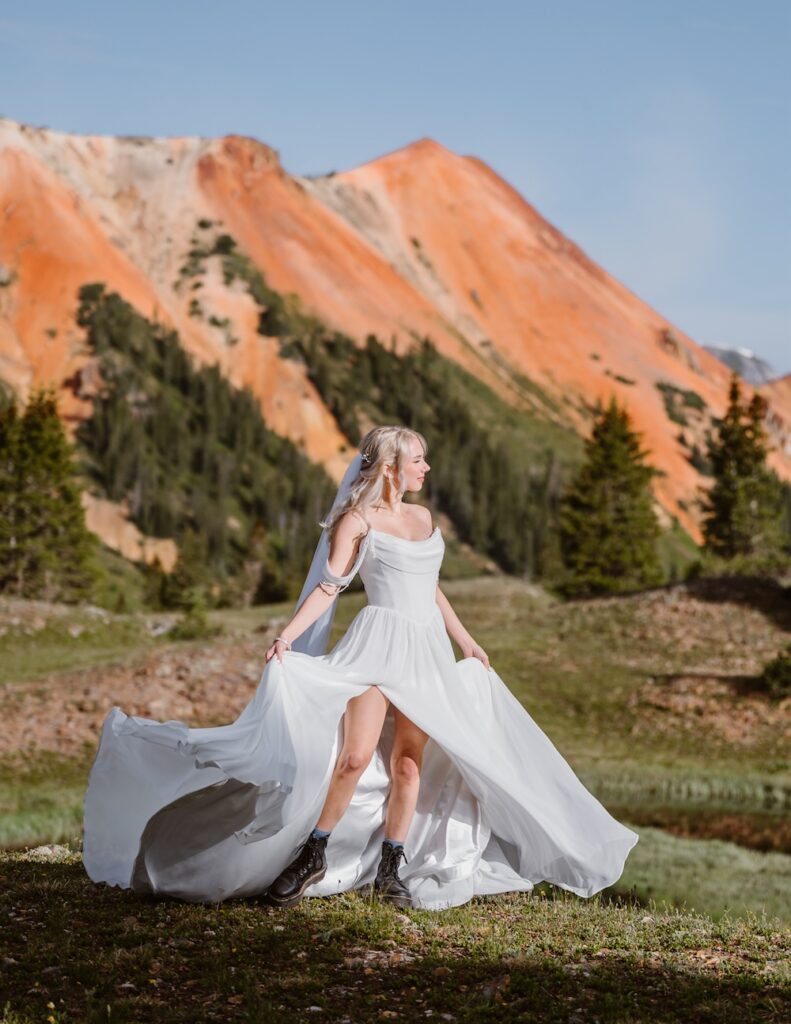
You have three distinct phases to work with. Blue hour comes first, usually 30 to 45 minutes before the sun clears the horizon. The sky is deep navy, the landscape is still in shadow, and everything feels moody and surreal. This is wildly underrated for couples and honestly one of my favorite times to shoot getting ready photos. Then you get golden hour, which on a good morning in the mountains lasts maybe 20 minutes before the light goes white and harsh. After that it is basically over from a soft light standpoint. Miss the window and you are just shooting in regular morning light, which is fine, but it is not why you woke up at 3am.
Check the exact sunrise time for your specific location the night before, not just a general area. I use Google Earth Pro for this constantly. You can look at the actual terrain around your shooting position, see where ridgelines sit relative to the horizon, and get a way more honest read on when direct light will actually hit your couples versus what a generic sunrise calculator spits out. In the San Juans especially, that information matters a lot.
Here is something that trips up a lot of photographers who have not shot in the mountains much: if you are in a bowl, you are not getting light at sunrise. The sun has to clear the ridgelines surrounding you before it reaches the valley floor, and that can push your actual direct light 30 minutes to an hour later than the posted sunrise time. I have been in bowls in late September where we did not get sun until almost 8am even though sunrise was at 6:45. Your couples will be standing around freezing while you explain why it is still dark. Learn the terrain before you commit to the location. Google Earth Pro will show you exactly what is going on if you take five minutes to look.
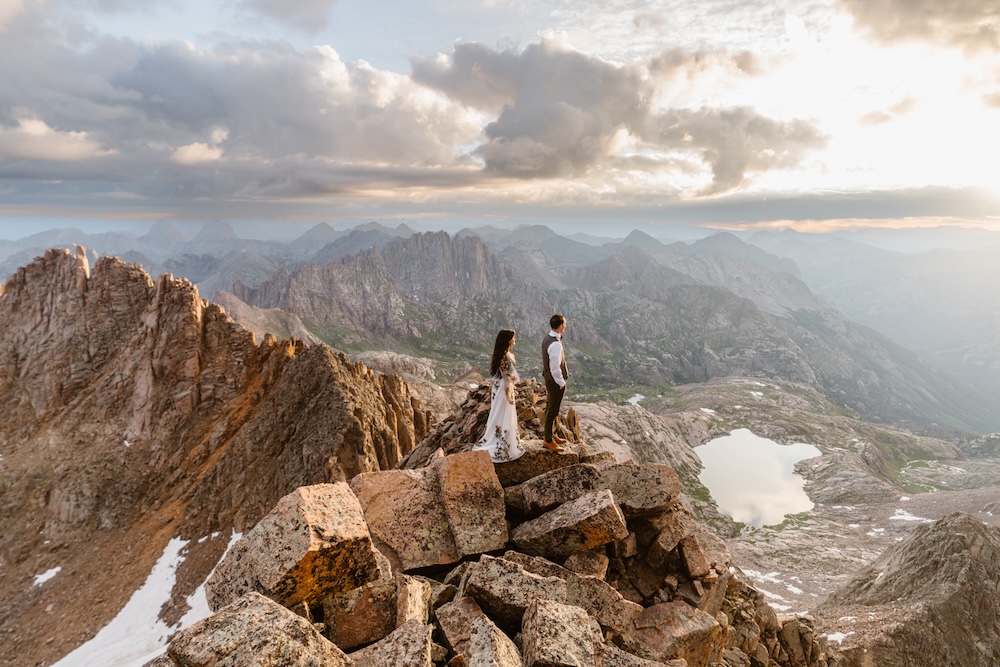
On the flip side, Colorado’s mountains are largely west facing, which makes them absolutely fire for sunrise work. The peaks light up early and dramatically. You get that full alpenglow sequence painting the high peaks while the valleys are still in shadow, giving you an insane layered backdrop that you just do not get in ranges oriented differently. This is one of the reasons I push Colorado couples toward early mornings whenever terrain and fitness allow. It is just too good to sleep through.
I use PhotoPills or The Photographer’s Ephemeris to confirm exact timing, but I always cross reference with Google Earth Pro to understand what the terrain is actually going to do to that light before I lock anything in.
Your couples should be at the location and camera ready at least 30 minutes before sunrise. That means you need to be there even earlier to scout your compositions before they arrive. No fumbling around trying to find your angles while the sky is going off behind you.
Reading and Working the Light as It Changes
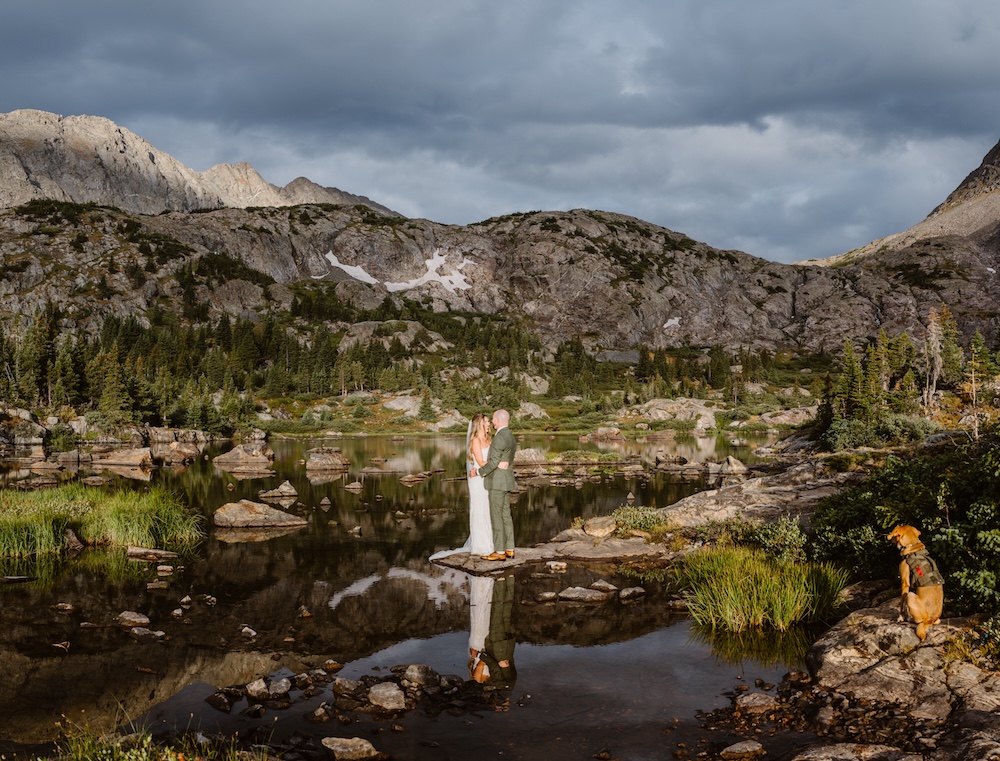
This is where a lot of photographers freeze up because it moves fast and they are not prepared for how quickly everything shifts. You have to stay loose and keep moving.
During blue hour lean into it hard. Do not fight the lack of warmth with white balance tweaks or overly bright exposures. Shoot darker. Let the sky do its thing. Silhouettes of couples against a deep blue horizon are straight up stunning when the terrain is clean. Long exposures with couples close together feel romantic and cinematic in a way that nothing else does. This is also your best window for big landscape wides because you can balance the sky and foreground without blowing anything out.
When alpenglow starts hitting the peaks, which in Colorado often happens before direct light reaches you at ground level, that is your cue to shift into portrait mode. Turn your couples toward that warm orange and pink light on the mountains behind them. Get tight on faces. This window is short and absolutely insane and you want couples in it, not just empty landscapes.
Once direct sun is on your subjects you need to manage it. Backlight is your best friend at this point. Get the sun behind your couples, nail your exposure on the faces, and let the background blow into gold. Shooting directly into it with intentional lens flare is something I do constantly and couples lose their minds over it in the gallery. It feels alive and electric in a way that flat front lit portraits just cannot touch.
Watch the shadows. Sunrise shadows are long and dramatic and they can either make a shot iconic or completely wreck it depending on where you are standing. Walk around. Look at what is happening at ground level. See what is casting shadows across faces before you lock in a composition. Do not just set up and blast away.
The Logistics That Will Make or Break the Whole Morning
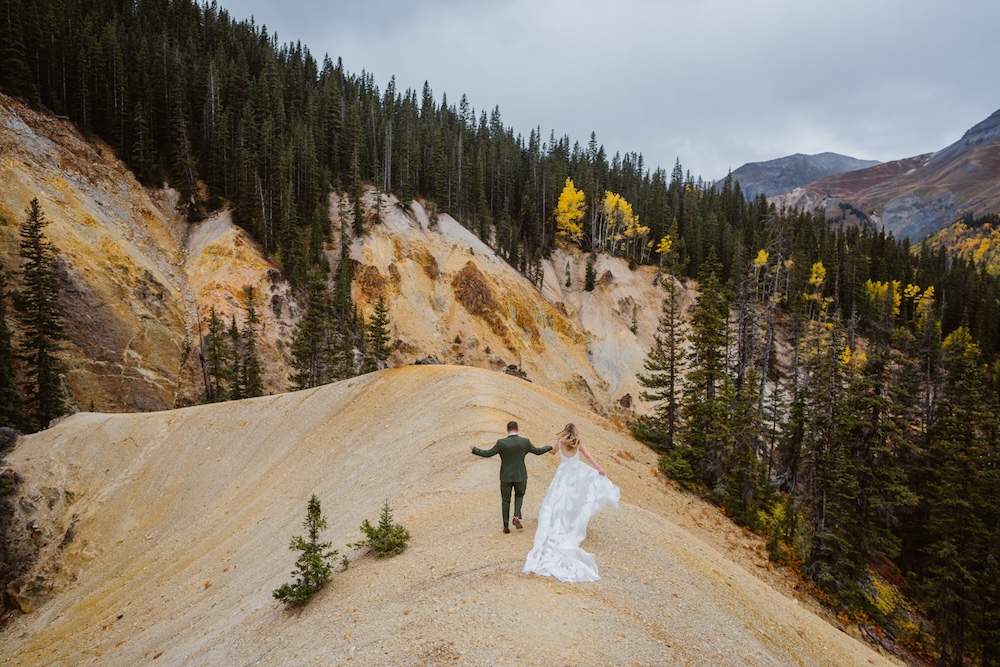
All the photographic skill in the world means nothing if the logistics fall apart and you miss the light scrambling to get your couples in position.
The single best structural move you can make for a sunrise elopement is to treat the morning like it has distinct acts and give each act its own location. Getting ready photos, the first look, and the ceremony should each have their own backdrop and their own focal moment. Do not cram all three into the same spot. When each scene is visually distinct it creates a narrative arc in the gallery that makes the whole day feel bigger and way more intentional. Pick each spot ahead of time, know exactly what you are shooting there and why, and move with purpose between them.
Get your couples through the first look before alpenglow even starts. This is something I have dialed in over years of doing this and it genuinely changes the whole morning. If the first look happens while it is still dark or just barely blue, you have a real buffer. They have seen each other, the nerves are gone, emotions have moved through, and you have time to get them changed and in position for the ceremony before the peak light arrives. If you wait until alpenglow to do the first look you are already behind. The ceremony is what you want timed to the best light of the morning, not the first look.
The night before, do a full run through of everything. Charge your batteries. Format your cards. Check your weather and your backup weather app. If you are going into the backcountry, know your approach in the dark. Know if there is a trail or if you are route finding. Know if there is a water crossing or a scramble that will slow you down. I still pad my approach estimate by 20 minutes because something always comes up and your couples do not need to feel that stress.
Communicate the timeline clearly. I tell couples this is not the same as showing up to a regular portrait session. The light will not wait and you cannot recreate it if you miss it. Most adventurous couples are completely down for the early wake up once they understand what they are going to get out of it. Frame it as part of the adventure because that is exactly what it is.
Tell your couples to layer up and mean it. Even in July, high alpine in Colorado at 5am is cold. Cold, stiff, miserable couples do not relax in front of a camera and it shows in every frame. Bring hand warmers if it is early or late season. A thermos of coffee is legitimately one of the best things I have ever brought on a sunrise shoot. Couples will love you for it.
Bring a headlamp and make sure your couples have one too. Bring a tripod if you plan on shooting blue hour long exposures. Shoot RAW even if you do not normally because the dynamic range demands of sunrise light make it basically mandatory.
Wrapping Up
Last thing: be calm and excited at the same time. Your energy is contagious. If you are stressed about the timeline your couples will feel it and tighten up. If you are pumped and locked in they will be pumped and locked in. Sunrise elopements are some of the most genuinely emotional and stunning shoots I have ever done, and when the light actually hits and everything comes together it is a full send moment that reminds you exactly why you chose this work in the first place.
Guest written by Sean Oblizalo from Vows and Peaks, specialized in Colorado elopements.
https://vowsandpeaks.com/
https://vowsandpeaks.com/best-place-to-elope-colorado/